Build a Fundraiser Scorecard So Next Year's Plan Writes Itself
- fundraising
- planning
- fundraiser results
- booster clubs
- PTA
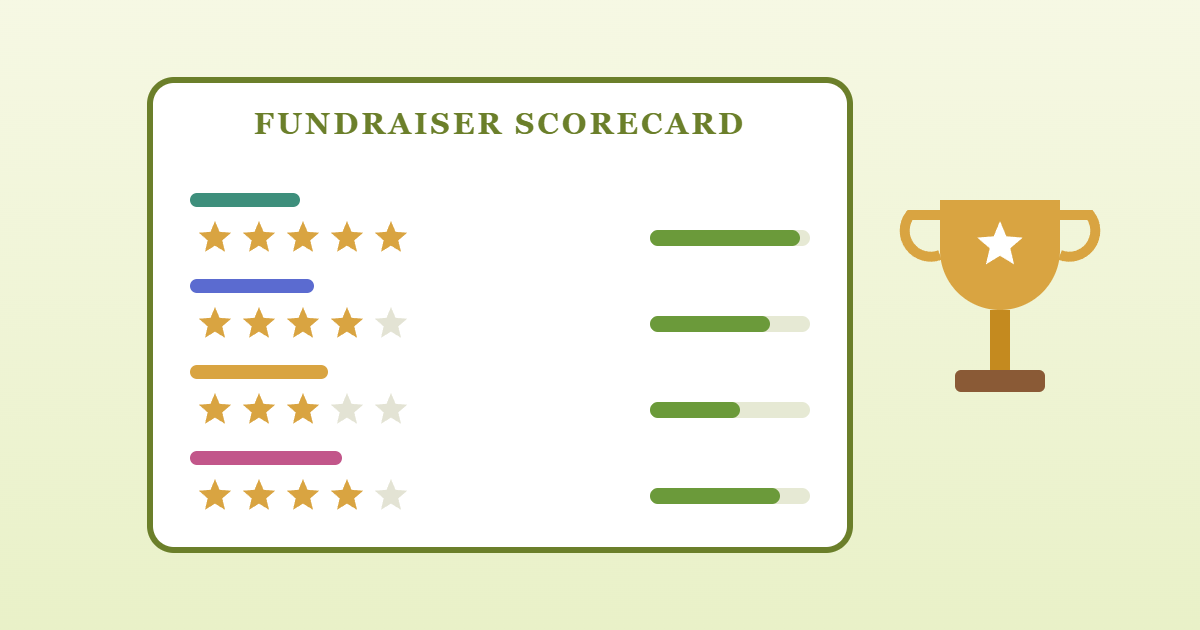
When next year's fundraising committee sits down to plan, someone asks the obvious questions: what did we do last year, and did it work? Too often nobody remembers. The person who ran it has moved on, and the numbers are scattered across emails and a spreadsheet nobody can find.
A one-page scorecard for each fundraiser fixes that. It takes about fifteen minutes to fill in while the details are fresh, and it saves hours of guesswork later.
One page per fundraiser
Keep the format the same every time, so you can compare one fundraiser with another. A single page is enough, and a short one is more likely to get filled in.
What to record
- The basics: the dates, the goal, the total raised, the costs, and what was left after costs.
- Participation: how many families took part out of how many you asked.
- Effort: how many volunteers helped and roughly how many hours it took.
- Timeline: what happened when, and where things stalled.
- Feedback: what families and volunteers said, good and bad.
- A verdict: one line on whether you'd do it again, and what you'd change.
Look at what's left and the effort together
A fundraiser that nets a little less but takes a fraction of the volunteer hours may be worth more than the big one that wore everyone out. Putting the money and the effort side by side is what makes a scorecard useful.
Score every fundraiser the same way
Rate each one from one to five on the same few questions: how much was left after costs, how much effort it took, how many families took part, what people said, and how well it fit your community. The scoring doesn't need to be scientific. It just needs to be consistent, so the comparisons mean something.
Fill it in within two weeks
Memory fades fast. Fill in the scorecard within a couple of weeks of the fundraiser ending, while you still remember how much work the final week took and what families said.
Review the scorecards before you plan
At the start of next year's planning, read the scorecards together and sort each fundraiser into keep, change, or drop. You'll make decisions from evidence rather than from whoever remembers the most.
Don't judge by the total alone
The biggest number isn't always the best result. Look at the return for the effort, how many families were involved, and how people felt about it afterward.
Keep it where the next team can find it
Store the scorecards with your other records, alongside the treasurer's handoff file, so next year's committee can find them without asking.
Your turn: which fundraiser gave your group the best return for the effort? Tell us what made it work.
Comments