A Six-Week Timeline for a Fall Fundraiser That Doesn't Stall
- fundraising
- fall fundraiser
- planning
- band boosters
- PTA
It's early October. The fall fundraiser is on the calendar, everyone agrees it's a good idea, and then three weeks go by without much happening. By the time the flyers go home, the deadline is close and the volunteers are already tired.
Most fundraisers don't fail because of the idea. They stall because nobody worked backward from the end date. Here's a simple six-week timeline you can adapt for almost any fall fundraiser.
Start with the end date, then count back
Pick the date the fundraiser must be finished, ideally before the holiday rush pulls families' attention elsewhere, then count back six weeks. Put every milestone on a shared calendar with a name next to it. A task with an owner and a date gets done. A task the "board" owns usually doesn't.
The six-week timeline
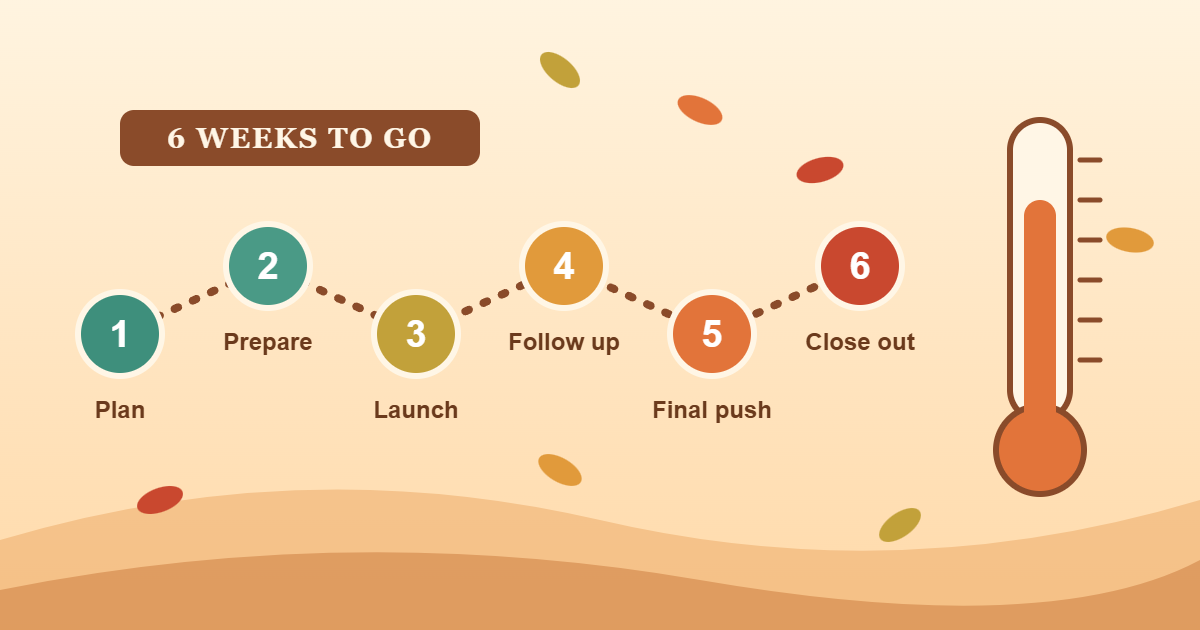
- Week 1 – Plan and approve. Set the goal and what the money is for, get a board vote, and confirm any approvals your school or district requires. Name one person who owns the fundraiser from start to finish.
- Week 2 – Prepare. Finish the materials, whether that's order forms, an online page, or a sign-up list. Recruit the small team that will handle follow-up, and set up a simple way to track results.
- Week 3 – Launch. Announce it where families already are, such as a rehearsal, a game, or a meeting, and send the same message by email or your group chat that day. Make the ask and the deadline impossible to miss.
- Week 4 – First follow-up. Share progress toward the goal, thank the families who have already taken part, and remind the rest.
- Week 5 – Final push. Send deadline reminders, make a few personal asks to families who haven't participated, and decide early whether an extension makes sense.
- Week 6 – Close out. Collect and deposit funds, deliver anything families ordered, and send thank-yous.
Choose a goal people can believe in
A vague goal ("raise as much as we can") gives people no reason to act now. Tie the goal to a specific need, such as instrument repairs, uniforms, or a trip, and build the number from real costs. Families give more readily when they can see where the money goes.
Track progress where everyone can see it
A weekly one-line update ("We're at 60% of our goal with two weeks left") keeps momentum up. Track what you raise against what it costs to raise it, including printing, vendor fees, and supplies, so you know your real net and not just the gross total.
Keep two sets of eyes on the money
Have at least two people count and record any cash or checks, and deposit promptly. Follow your organization's own financial procedures, and if you don't have written ones, this is a good year to start.
Write down what happened
When the fundraiser ends, spend ten minutes answering five questions while everything is fresh: How much did we raise versus our goal? How many families took part? What took the most time? What did families say? What will we change next time? Save the answers where next year's team can find them, because the person who ran this year's fundraiser may not be around to explain it.
Check the rules before you commit
Many schools require approval before an organization runs a fundraiser, and raffles or drawings are regulated differently from state to state and even locality to locality. Confirm what applies to you before you print anything.
Your turn: where does your fundraiser usually stall: the launch, the middle follow-up, or the finish? Tell us what's worked for your group.
Comments